

There's this meme that's been flying around the blogosphere lately - part of the fun of reading blogs far and wide is to watch these things pop around like viruses. I've been wondering if it would finally blow my way. And yesterday Kim decided to toss the ball (to mix metaphors) into my backyard. So here goes.
Here are the rules:
Pick up the nearest book (of at least 123 pages).
Open the book to page 123.
Find the fifth sentence.
Post the next three sentences.
Tag five people.
The book: Odd Girl Out - the Hidden Culture of Aggression in Girls, by Rachel Simmons.
"She may flirt with a guy who is dating someone else or have a crush on a boy who is already spoken for. As Lyn Mikel Brown observed in her study of girls' anger, 'a 'slut' is not someone who is sexually active per se, but rather someone who is disconnected from her partner of from other girls.' Psychologist Deborah Tolman writes that 'the fact of girls' sexual activity is explained in terms of relationships: girls have sex in the service of relationships.'"
(hey - when you work with teenagers, you need to pay attention to these sorts of things).
So now I tag:
Anya, because she needs to update her blog anyway
Lori, because she's a faithful reader here
Susan, because she reads a lot
Russ, because he needs a distraction
Whoever else wants a free tag - this one is yours.
Showing posts with label books. Show all posts
Showing posts with label books. Show all posts
Saturday, February 09, 2008


Tuesday, October 02, 2007
Book Report
One of the nice things about a train ride is you have lots of time to read. . .
I started and finished Ernest Gordon's To End All Wars while on the way to Montana. Karina and I had watched the movie a couple months ago (be warned: it is incredibly brutal) and been moved by this powerful story. Unfortunately, as it turned out, the book and the move are not the same story. In fact, other than the similarity of the major premise (a British officer in a Japanese POW camp during WW2), they had almost nothing in common.
However. . .
That was only disappointing insomuch as I kept waiting for certain events from the movie to show up. The movie had colored my expectations for the book, which meant I couldn't take the book on its own merits. Which is too bad, because, upon completing the book, I would say it is as powerful as the movie, perhaps even more so. But you have to let the book speak for itself. The story is truly miraculous, as this band of prisoners devolve into a wild bunch of animals at the hands of their captors, only to be transformed by the Spirit of Christ into a true Community of compassion and care. Somehow, in the midst of hell, these men found the power to love each other, to care for each other, to even forgive their Japanese tormentors. When people ask "Does Christianity work?", the story of this book says "absolutely!" And in a day and age of spiteful attacks, divisive language, polarized religions and selfish money-grubbing politicians and religious leaders, there is a real lesson here about what being a True Follower of Christ is all about. In fact, I think it is a perfect example of what Scot McKnight is arguing for in his latest book. But more on that later.
First, a quote from Gordon: "We wanted to learn now what Christianity had to say about our redemption. Before we could do, we had to be. It was not only our minds but also our wills that had to be changed. We had to be called into being by love. That lonely figure on the Cross had redeemed mankind by His love and sacrifice. Yet while that redemption was a once-for-all event, it was also a fact that we had to be redeemed daily to be in a state of being redeemed. . . .We had two alternatives: we could choose the way of men, based on the sovereignty of the natural order, closed, sealed and impersonal; or we could choose the way of Jesus Christ, free and personal, based on the sovereignty of God the Father. The wind of the spirit had blown upon us; we could not prove how or whence it had come. But our experience pointed to a source beyond ourselves. We knew personal fulfillment, love, joy, peace, wholeness, as we committed ourselves to the One who had called us. Only as we responded to this Word did we receive the power to progress toward true humanity. Our life on the horizontal plane was made meaningful at the point where it met the vertical. At the point marked by the Cross we found ourselves."
Just before we left, I also finished Stephen Lawhead's "Scarlet," the second book of his Robin Hood trilogy. It's not fiction on par with, say, Tolstoy or Dickens, but as far as Christian fiction goes, it's about the best I've come across. Put it this way: I enjoy it, and I can recommend it without being embarrassed, unlike a lot of books in the Christian Fiction aisle.
And last night I finally finished Sara Miles' Take This Bread: A Radical Conversion. You know, there are those books you read and quickly forget. There are those books that give you an interesting thought or two. And then there are books that get under your skin and completely and forever change the way you look at things. This is one of the third kind. This book is powerful, it is overwhelming. You can not read this book and approach the Lord's Supper the same way again. You can not read this book and think of Christianity the same way. This book will change you.
It will also, probably, bother you. Sara is raw. She's rough. She uses language and lives a lifestyle that would make most Christians furrow their brow. She throws out statements like this: "You know," Swami Jeff told me once, "God couldn't care less about the church. We don't understand the Eucharist, or that bread and wine live within us, so we ritualize the things that hold the mystery. We focus on the container and formalize the mystery. But you can't do that." Which is, of course, so wrong in so many ways. God does care about the Church. The Church is God at work in the world. And there are so many other things about this book that are so bothersome. And offensive.
And yet, her voice is necessary, because she get so much right. She understands the radical, accepting love of Jesus Christ for this world. She gets that love for Jesus demands a love for all his children. She gets that serving Christ is more important than showing up to church and looking pretty. "Doing the Gospel rather than just quoting it was the best way I could find out what God was up to." She gets that feeding the poor is one of the essentials of following Christ. And she gets the fact that Christ is for the poor, the outcast, the marginalized, the hungry. She understands that the Kingdom of God is right here, right now, right under our noses, if we would only open our eyes to see it. She hammers home the idea that community is core to Christianity - but not the community we choose; it's the community God calls to us, and calls us to. She gets the Modern Church. "My suspicion was that committees in churches served the same purpose as committees in other institutions: They were holding tanks for people who professed interest in an issue but didn't always want to act." And, I've got to tell you, the story of her conversion, of how she walked into church, received Communion, and was overcome by God, is breathtakingly powerful. I wish all could read her story.
But, in the end, a lot of Christians will be scandalized by much of who she is. And there are parts that make me uncomfortable. Until I realize who she really is: a sinner saved by grace, on the way to holiness. And this book is simply one step in that process.
Now, it's onto the next book I've been excited about - Scot McKnight's A Community Called Atonement. The best part of this book - it connects doxis with praxis - what we believe with what we ought to be doing. It's about the atonement lived in daily life, not in obtuse theories and ivory-tower debates. It's about atonement working in our lives, which is the only place that it really matters
I started and finished Ernest Gordon's To End All Wars while on the way to Montana. Karina and I had watched the movie a couple months ago (be warned: it is incredibly brutal) and been moved by this powerful story. Unfortunately, as it turned out, the book and the move are not the same story. In fact, other than the similarity of the major premise (a British officer in a Japanese POW camp during WW2), they had almost nothing in common.
However. . .
That was only disappointing insomuch as I kept waiting for certain events from the movie to show up. The movie had colored my expectations for the book, which meant I couldn't take the book on its own merits. Which is too bad, because, upon completing the book, I would say it is as powerful as the movie, perhaps even more so. But you have to let the book speak for itself. The story is truly miraculous, as this band of prisoners devolve into a wild bunch of animals at the hands of their captors, only to be transformed by the Spirit of Christ into a true Community of compassion and care. Somehow, in the midst of hell, these men found the power to love each other, to care for each other, to even forgive their Japanese tormentors. When people ask "Does Christianity work?", the story of this book says "absolutely!" And in a day and age of spiteful attacks, divisive language, polarized religions and selfish money-grubbing politicians and religious leaders, there is a real lesson here about what being a True Follower of Christ is all about. In fact, I think it is a perfect example of what Scot McKnight is arguing for in his latest book. But more on that later.
First, a quote from Gordon: "We wanted to learn now what Christianity had to say about our redemption. Before we could do, we had to be. It was not only our minds but also our wills that had to be changed. We had to be called into being by love. That lonely figure on the Cross had redeemed mankind by His love and sacrifice. Yet while that redemption was a once-for-all event, it was also a fact that we had to be redeemed daily to be in a state of being redeemed. . . .We had two alternatives: we could choose the way of men, based on the sovereignty of the natural order, closed, sealed and impersonal; or we could choose the way of Jesus Christ, free and personal, based on the sovereignty of God the Father. The wind of the spirit had blown upon us; we could not prove how or whence it had come. But our experience pointed to a source beyond ourselves. We knew personal fulfillment, love, joy, peace, wholeness, as we committed ourselves to the One who had called us. Only as we responded to this Word did we receive the power to progress toward true humanity. Our life on the horizontal plane was made meaningful at the point where it met the vertical. At the point marked by the Cross we found ourselves."
Just before we left, I also finished Stephen Lawhead's "Scarlet," the second book of his Robin Hood trilogy. It's not fiction on par with, say, Tolstoy or Dickens, but as far as Christian fiction goes, it's about the best I've come across. Put it this way: I enjoy it, and I can recommend it without being embarrassed, unlike a lot of books in the Christian Fiction aisle.
And last night I finally finished Sara Miles' Take This Bread: A Radical Conversion. You know, there are those books you read and quickly forget. There are those books that give you an interesting thought or two. And then there are books that get under your skin and completely and forever change the way you look at things. This is one of the third kind. This book is powerful, it is overwhelming. You can not read this book and approach the Lord's Supper the same way again. You can not read this book and think of Christianity the same way. This book will change you.
It will also, probably, bother you. Sara is raw. She's rough. She uses language and lives a lifestyle that would make most Christians furrow their brow. She throws out statements like this: "You know," Swami Jeff told me once, "God couldn't care less about the church. We don't understand the Eucharist, or that bread and wine live within us, so we ritualize the things that hold the mystery. We focus on the container and formalize the mystery. But you can't do that." Which is, of course, so wrong in so many ways. God does care about the Church. The Church is God at work in the world. And there are so many other things about this book that are so bothersome. And offensive.
And yet, her voice is necessary, because she get so much right. She understands the radical, accepting love of Jesus Christ for this world. She gets that love for Jesus demands a love for all his children. She gets that serving Christ is more important than showing up to church and looking pretty. "Doing the Gospel rather than just quoting it was the best way I could find out what God was up to." She gets that feeding the poor is one of the essentials of following Christ. And she gets the fact that Christ is for the poor, the outcast, the marginalized, the hungry. She understands that the Kingdom of God is right here, right now, right under our noses, if we would only open our eyes to see it. She hammers home the idea that community is core to Christianity - but not the community we choose; it's the community God calls to us, and calls us to. She gets the Modern Church. "My suspicion was that committees in churches served the same purpose as committees in other institutions: They were holding tanks for people who professed interest in an issue but didn't always want to act." And, I've got to tell you, the story of her conversion, of how she walked into church, received Communion, and was overcome by God, is breathtakingly powerful. I wish all could read her story.
But, in the end, a lot of Christians will be scandalized by much of who she is. And there are parts that make me uncomfortable. Until I realize who she really is: a sinner saved by grace, on the way to holiness. And this book is simply one step in that process.
Now, it's onto the next book I've been excited about - Scot McKnight's A Community Called Atonement. The best part of this book - it connects doxis with praxis - what we believe with what we ought to be doing. It's about the atonement lived in daily life, not in obtuse theories and ivory-tower debates. It's about atonement working in our lives, which is the only place that it really matters
Thursday, September 13, 2007
Book News
Yesterday I finished reading Tim Alan Gardner's Sacred Sex. Overall, I would say it's a good book and worth the read.
His premise is that the sexual act is a sacred act, for two reasons. First, because it was created by God way back In the Beginning, created for the purpose of unity - taking one man and one woman and creating One. On the marriage bed, the great mystery is played out wherein two souls intertwine to become one. The second reason sex is sacred is that it is ultimately the image of Christ and His Church - the image of ultimate, sacrificial love, the truest metaphor for the organic unity of Christ indwelling his bride.
Therefore, our culture's many views on sexuality - cheap sex, hooking up, obsession with body type, clothing, and body fat count, sex as advertising ploy, sex as thrill, sex as entertainment - all these are demeaning to all that sex is supposed to mean.
However, ultimately the book is not a critique on culture. Instead, it is a roadmap to rebuilding healthy sexuality in the one place it is meant to exist - in the lifelong marriage relationship of husband and wife.
What I like most - his emphasis on the Unifying aspect of sexuality. The ultimate question to be asked in any sexual activity comes down to this - is this striving toward unity between me and my spouse? Or is it all about me, my desires, my satisfaction?
Now, the truth is, this is one of those books where I read it and say "that's all pretty simple and obvious." But then I'm reminded that 24/7 we're bombarded by messages that seek to carry us in the opposite direction, and that millions of marriages out there are struggling to survive. And if a couple (or person) came to me looking for advice in this area, I would definitely recommend this book. It's worth the read, and more people ought to read it.
I only have two criticisms:
First, the theological work is a little paltry. It could have been a lot richer, a lot deeper, a lot fuller. Gardner isn't a theologian, but he still could have plumbed the depths of the Genesis and Ephesians passages to greater levels. Perhaps consulting a theologian or two would have rounded out the work.
Second, Gardner has the annoying habit of making a point and then repeating it four or five times, as if to fill up space or reinforce his original point through repetition. In other words, he'll make a point, and then say the same thing, only with different words, about three or four more times. What I mean is, he'll make a point, and then he'll rephrase the point but say pretty much the same thing. Sometimes people make points by repeating the same point over and over again, which ends up being so much space filler. Gardner tends to state his idea, and then he'll restate the same idea numerous times, only with different words, so that it seems he's saying a lot when really it's the same thing. Sometimes Gardner gets a little repetitive.
Got it?
But those are small shortcomings to what I believe would be a very helpful resource to a lot of struggling people out there.
Now I'm off in other directions. Sara Miles' A Radical Conversion comes next. It's the story of how a lesbian left-wing atheist journalist found Jesus. Ought to be interesting, to say the least.
His premise is that the sexual act is a sacred act, for two reasons. First, because it was created by God way back In the Beginning, created for the purpose of unity - taking one man and one woman and creating One. On the marriage bed, the great mystery is played out wherein two souls intertwine to become one. The second reason sex is sacred is that it is ultimately the image of Christ and His Church - the image of ultimate, sacrificial love, the truest metaphor for the organic unity of Christ indwelling his bride.
Therefore, our culture's many views on sexuality - cheap sex, hooking up, obsession with body type, clothing, and body fat count, sex as advertising ploy, sex as thrill, sex as entertainment - all these are demeaning to all that sex is supposed to mean.
However, ultimately the book is not a critique on culture. Instead, it is a roadmap to rebuilding healthy sexuality in the one place it is meant to exist - in the lifelong marriage relationship of husband and wife.
What I like most - his emphasis on the Unifying aspect of sexuality. The ultimate question to be asked in any sexual activity comes down to this - is this striving toward unity between me and my spouse? Or is it all about me, my desires, my satisfaction?
Now, the truth is, this is one of those books where I read it and say "that's all pretty simple and obvious." But then I'm reminded that 24/7 we're bombarded by messages that seek to carry us in the opposite direction, and that millions of marriages out there are struggling to survive. And if a couple (or person) came to me looking for advice in this area, I would definitely recommend this book. It's worth the read, and more people ought to read it.
I only have two criticisms:
First, the theological work is a little paltry. It could have been a lot richer, a lot deeper, a lot fuller. Gardner isn't a theologian, but he still could have plumbed the depths of the Genesis and Ephesians passages to greater levels. Perhaps consulting a theologian or two would have rounded out the work.
Second, Gardner has the annoying habit of making a point and then repeating it four or five times, as if to fill up space or reinforce his original point through repetition. In other words, he'll make a point, and then say the same thing, only with different words, about three or four more times. What I mean is, he'll make a point, and then he'll rephrase the point but say pretty much the same thing. Sometimes people make points by repeating the same point over and over again, which ends up being so much space filler. Gardner tends to state his idea, and then he'll restate the same idea numerous times, only with different words, so that it seems he's saying a lot when really it's the same thing. Sometimes Gardner gets a little repetitive.
Got it?
But those are small shortcomings to what I believe would be a very helpful resource to a lot of struggling people out there.
Now I'm off in other directions. Sara Miles' A Radical Conversion comes next. It's the story of how a lesbian left-wing atheist journalist found Jesus. Ought to be interesting, to say the least.
Thursday, August 09, 2007
On books
I just finished Eat this Book, Eugene Peterson's most recent book, which Scot McKnight calls the best book about the Bible ever written. Or something along those lines. I did find it very helpful, informative, and every bit worth a recommendation to any and all.
However, I was a little surprised by the hard right it took. The first half related to how we read the Bible, and it's powerful stuff. It ought to be required reading for all who follow in Christ's footsteps. But just when he finished laying out the philosophical groundwork for spiritual reading, just when you turn the page for the "how-to," he instead went into a basic history of the Bible - where it came from, how it got to us. And he followed that with some interesting stories about archeology and its influence on how we read the Bible. And he included a section explaining his reasoning behind writing The Message. All of which, while very worthwhile stuff, didn't seem to flow from the first part of the book. I don't know. Maybe I'm missing something. You read it and tell me. I will admit that it would be more worthwhile for people who had never taken the time to study the history of the Bible. Maybe it was just ground that I was too familiar with.
In the end, my only complaint was that he never really went into the "how-to" part of Bible reading. He explained the thought behind it, but never said "so, here are some thoughts about how you might make this work in your life." Which means that you might have to pick up another book on Bible reading to go along with this one. Otherwise you might be left wanting just a bit more.
That's my $.o2, anyway.
But let me give you one last quote that I found especially helpful, especially in light of some of my recent online theological discussions:
"Once the Bible became a revered authority it became possible to treat it as a thing, an impersonal authority, to use it to define or damn others, and to avoid dealing with God's word in a personal, relational, and obedient way. It didn't take long for people to start using the Bible as a cover, as a front, by honoring it, praising it as a verbal artifact, defending it as the Truth against all comers, treating it as a classic, as great literature, rather than receiving these words and responding to these words as God's words to them, personally. But the words of Scripture are not primarily words, however impressive, that label or define or prove, but words that mean, that reveal, that shape the soul, that generate saved lives."
Good to remember.
I realized I said awhile ago I'd post some thoughts on To Continue The Dialogue, the Mennonite book on homosexuality that I finished last month. And I haven't done that yet. So this morning, as I sat at the Honda dealership, waiting for a pressure switch to be replaced in the car, I began writing those comments down. They should be here soon.
And now? I told you a couple days ago that the Amazon box showed up. . .but I've had a stack of 10 books on my immediate to-read pile, so I can't jump ahead. On top of the pile was Sacred Sex, by Tim Alan Gardner. So I guess it's next.
note: from first glance, this appears to be more like Peterson's book - a philosophical, theological work, not a how-to book. So rest easy.
However, I was a little surprised by the hard right it took. The first half related to how we read the Bible, and it's powerful stuff. It ought to be required reading for all who follow in Christ's footsteps. But just when he finished laying out the philosophical groundwork for spiritual reading, just when you turn the page for the "how-to," he instead went into a basic history of the Bible - where it came from, how it got to us. And he followed that with some interesting stories about archeology and its influence on how we read the Bible. And he included a section explaining his reasoning behind writing The Message. All of which, while very worthwhile stuff, didn't seem to flow from the first part of the book. I don't know. Maybe I'm missing something. You read it and tell me. I will admit that it would be more worthwhile for people who had never taken the time to study the history of the Bible. Maybe it was just ground that I was too familiar with.
In the end, my only complaint was that he never really went into the "how-to" part of Bible reading. He explained the thought behind it, but never said "so, here are some thoughts about how you might make this work in your life." Which means that you might have to pick up another book on Bible reading to go along with this one. Otherwise you might be left wanting just a bit more.
That's my $.o2, anyway.
But let me give you one last quote that I found especially helpful, especially in light of some of my recent online theological discussions:
"Once the Bible became a revered authority it became possible to treat it as a thing, an impersonal authority, to use it to define or damn others, and to avoid dealing with God's word in a personal, relational, and obedient way. It didn't take long for people to start using the Bible as a cover, as a front, by honoring it, praising it as a verbal artifact, defending it as the Truth against all comers, treating it as a classic, as great literature, rather than receiving these words and responding to these words as God's words to them, personally. But the words of Scripture are not primarily words, however impressive, that label or define or prove, but words that mean, that reveal, that shape the soul, that generate saved lives."
Good to remember.
I realized I said awhile ago I'd post some thoughts on To Continue The Dialogue, the Mennonite book on homosexuality that I finished last month. And I haven't done that yet. So this morning, as I sat at the Honda dealership, waiting for a pressure switch to be replaced in the car, I began writing those comments down. They should be here soon.
And now? I told you a couple days ago that the Amazon box showed up. . .but I've had a stack of 10 books on my immediate to-read pile, so I can't jump ahead. On top of the pile was Sacred Sex, by Tim Alan Gardner. So I guess it's next.
note: from first glance, this appears to be more like Peterson's book - a philosophical, theological work, not a how-to book. So rest easy.
Tuesday, August 07, 2007
The Big Box
The Amazon box showed up this morning. Some things I'm a little excited to see:

I'm not expecting to agree with everything she says. I'm not expecting to accept her position on a few things. . .but I've heard she is worth listening to, so perhaps I'll learn something anyway.

Orthodoxy, by G.K. Chesterton
I know. You can read it free online. But still, I prefer something tangible in my hands, something I can mark up and go back to in years to come.

Sex, Economy, Freedom & Community, by Wendell Berry
I actually bought this book once before, then loaned it out, and never got it back. His chapter on gay marriage is worth the price alone.

The Crime of Living Cautiously, by Luci Shaw
I've read a lot of Luci's poetry, but not so much her prose.

What the Light Was Like: Poems, by Luci Shaw
Speaking of Luci's poetry. . .

The Genesis of It All, by Luci Shaw
It's a kids book, I suppose. Telling the story of Creation with sweeping pictures and poetic language.
There was also some music in the box.

A New Standard, by Steve Tyrell
He's the guy who sang all the jazz standards on the Father of the Bride soundtracks.

Chaotic Resolve, by Plumb
One of my favorite Christian singers of all time. A little techno, a little rock, some powerful lyrics, a strong voice. . .

Heart of the Heartland, by Peter Ostroushko
He plays mandolin with the Prairie Home Companion band. Beautifully.

Dream Big, by Ryan Shupe and the Rubber Band
I know nothing about them.

Take this Bread, by Sara Miles
I'm not expecting to agree with everything she says. I'm not expecting to accept her position on a few things. . .but I've heard she is worth listening to, so perhaps I'll learn something anyway.

Orthodoxy, by G.K. Chesterton
I know. You can read it free online. But still, I prefer something tangible in my hands, something I can mark up and go back to in years to come.

Sex, Economy, Freedom & Community, by Wendell Berry
I actually bought this book once before, then loaned it out, and never got it back. His chapter on gay marriage is worth the price alone.

The Crime of Living Cautiously, by Luci Shaw
I've read a lot of Luci's poetry, but not so much her prose.

What the Light Was Like: Poems, by Luci Shaw
Speaking of Luci's poetry. . .

The Genesis of It All, by Luci Shaw
It's a kids book, I suppose. Telling the story of Creation with sweeping pictures and poetic language.
There was also some music in the box.

A New Standard, by Steve Tyrell
He's the guy who sang all the jazz standards on the Father of the Bride soundtracks.

Chaotic Resolve, by Plumb
One of my favorite Christian singers of all time. A little techno, a little rock, some powerful lyrics, a strong voice. . .
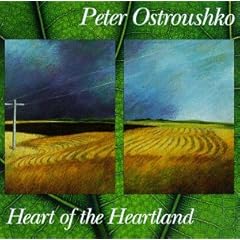
Heart of the Heartland, by Peter Ostroushko
He plays mandolin with the Prairie Home Companion band. Beautifully.
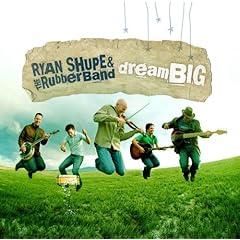
Dream Big, by Ryan Shupe and the Rubber Band
I know nothing about them.
Friday, July 06, 2007
Friday Items of Note
+ There will be no Great Sermon Experiment post this week, as I'll be away on July 15. Lakebay's own Harvey Roberts will be filling in to preach that day. For what it's worth, this is the first Sunday since we arrived that I will be away from Lakebay, that's not related to church business. Only the third Sunday we've missed altogether - I was gone in January for the Confirmation Retreat, and last September for Family Camp at Cascade's Camp. Finally, we get a real vacation.
+ Ben Witherington has written a book about baptism. He summarizes the work over on his blog. He's bound to upset and challenge believers on both sides (infant vs. believers) which is why probably just about everybody ought to read it. It will be soon added to my Amazon list.
+ I finished "To Continue the dialogue," the Mennonite book regarding homosexuality and the Church. It was perhaps serendipitous that just as I was finishing it, I began following the discussion over at Eugene Cho's Blog (see a couple days ago). The middle of the book gave me more of what I was looking for - both in firmer theological work, and in the scientific work as well. My mind is spinning off in a number of directions, and I need time to process. Don't read more into that than is there. I haven't changed my position on the issue; in fact, that's part of the struggle. I've reached the point where I don't believe I will change my mind. The scriptural texts are too clear on this one. But. . .how to maintain a spirit of grace in the world we live in. Must we demand that "they" must change their ways before being allowed into fellowship within the Christian church? How to live in that place of mercy and grace, believing and teaching that a certain activity is sinful, while allowing time and space for the Holy Spirit to do God's work in individual lives? That is the tough part.
For the time being, I'm moving in a different direction. Next on my book list is "Eat This Book," by Eugene Peterson. His opening image is powerful - the Bible is not primarily a book we read for instruction, a book we read for devotional thoughts, a book we read for theology; it is primarily a meal we eat. And like food is digested into nutrients and minerals that make their way to the furthest reaches of our bodies and eventually become us, shaping and forming us, so too are the scriptures to dig deeply into us and form us as we ingest them.
+ Friday Random 10. #2 I saw live - it's the reason I bought their album. #3 is off a wedding album some friends gave us. #7 is from the Cold Mountain soundtrack. #8 is off one of my all-time favorite christian albums. Unfortunately, after this album Nashville got ahold of Bebo, and he's been merely a shadow of his potential ever since.
+ Ben Witherington has written a book about baptism. He summarizes the work over on his blog. He's bound to upset and challenge believers on both sides (infant vs. believers) which is why probably just about everybody ought to read it. It will be soon added to my Amazon list.
+ I finished "To Continue the dialogue," the Mennonite book regarding homosexuality and the Church. It was perhaps serendipitous that just as I was finishing it, I began following the discussion over at Eugene Cho's Blog (see a couple days ago). The middle of the book gave me more of what I was looking for - both in firmer theological work, and in the scientific work as well. My mind is spinning off in a number of directions, and I need time to process. Don't read more into that than is there. I haven't changed my position on the issue; in fact, that's part of the struggle. I've reached the point where I don't believe I will change my mind. The scriptural texts are too clear on this one. But. . .how to maintain a spirit of grace in the world we live in. Must we demand that "they" must change their ways before being allowed into fellowship within the Christian church? How to live in that place of mercy and grace, believing and teaching that a certain activity is sinful, while allowing time and space for the Holy Spirit to do God's work in individual lives? That is the tough part.
For the time being, I'm moving in a different direction. Next on my book list is "Eat This Book," by Eugene Peterson. His opening image is powerful - the Bible is not primarily a book we read for instruction, a book we read for devotional thoughts, a book we read for theology; it is primarily a meal we eat. And like food is digested into nutrients and minerals that make their way to the furthest reaches of our bodies and eventually become us, shaping and forming us, so too are the scriptures to dig deeply into us and form us as we ingest them.
+ Friday Random 10. #2 I saw live - it's the reason I bought their album. #3 is off a wedding album some friends gave us. #7 is from the Cold Mountain soundtrack. #8 is off one of my all-time favorite christian albums. Unfortunately, after this album Nashville got ahold of Bebo, and he's been merely a shadow of his potential ever since.
- Ave Verum Corpus (Mozart) – coro e Orchestra dell’Accademia Nazionale di Santa Cecilia
- North to
- You’ll Be In My Heart - Phil Collins
- Hurricane – Mindy Smith
- Beautiful Dream Visions – Sara Masen
- Meant to Be – Jim Brickman
- Sitting on Top of the World – Jack White
- Selwood Farm – Bebo Norman
- Get Me Through December – Alison Krauss
- I’ve Found Jesus – Delirious?
Tuesday, May 29, 2007
Book Update
I'm still working through To Continue the Dialogue: Biblical Interpretation and Homosexuality. Homosexuality is obviously a huge issue in the Church today, and I don't see it being settled any time soon. The debate continues to rage, churches continue to divide, and, as society becomes more and more interested in "tolerance," those churches who choose to treat homosexual practice as sin are going to be viewed by outsiders with suspicion and anger. It is my contention that we all need to think deeply about this issue, if only to "be ready to give an answer" to our belief and practice. If a gay couple walks into my church, I want to be ready to speak to them from the wrestling I've done, not from a pamphlet I read somewhere.
Unfortunately, so far at least, this book has not been the help I thought it might be. There have been a few small nuggets here and there, but, at least in framing the discussion, it's left me wanting more. The general feel through the first eight chapters has been almost passive-aggressive. Perhaps that's the Mennonite way showing through - above all, desiring to be "nice" and not offend anyone. Thus we read "The Bible says homosexual activity is a sin" but then "so we must still be open to hear all sides of the discussion and be willing to change our position if necessary."
One particularly troubling chapter was the one attempting to lay out the biblical framework for the discussion. The logic essentially went like this:
- All the verses supposedly condemning homosexuality (and all the reasons why they actually don't)
- All the ways to rightly interpret those verses, thus showing they have nothing to do with homosexuality
- Now let's look at the two options and decide which is the right one.
In other words, it wasn't a fair framework to begin with.
I was also surprised by one author using Richard Hays, who actually concludes that same-sex sexual activity is outside the will of God, to support his position that there is nothing inherently wrong with homosexual activity.
I'm trying hard to have an open mind and not bring all my presuppositions into the reading of this book, but it's hard when I watch people posturing and refusing to take their own stands. Maybe it's just me; I prefer to see two well-defined positions, hear their supporting arguments, and then decide between the two. That's not what is happening here.
However, let me share one of the better passages I've read:
From either perspective, however, I am often deeply offended by the rhetoric I hear and the things written by my brothers and sisters in the church. I find the attitudes expressed, and the lack of respect and care for the gay and lesbian person, disappointing, and at times very painful. Too many times people speak on this subject out of ignorance. Too many who speak have never held a significant conversation with gay or lesbian persons in order to understand their experience and to care for them. Too many of our gay and lesbian sons and daughters in the church have no one in the church who cares for them as persons, no one who prays for them, no one to express interest in their spiritual life.
Instead, I hear people in church circles again and again reflect the anger, fear, and disgust of our society. When I as a parent hear judgment without genuine care for the person, I feel deeply disillusionment and grief."
Unfortunately, so far at least, this book has not been the help I thought it might be. There have been a few small nuggets here and there, but, at least in framing the discussion, it's left me wanting more. The general feel through the first eight chapters has been almost passive-aggressive. Perhaps that's the Mennonite way showing through - above all, desiring to be "nice" and not offend anyone. Thus we read "The Bible says homosexual activity is a sin" but then "so we must still be open to hear all sides of the discussion and be willing to change our position if necessary."
One particularly troubling chapter was the one attempting to lay out the biblical framework for the discussion. The logic essentially went like this:
- All the verses supposedly condemning homosexuality (and all the reasons why they actually don't)
- All the ways to rightly interpret those verses, thus showing they have nothing to do with homosexuality
- Now let's look at the two options and decide which is the right one.
In other words, it wasn't a fair framework to begin with.
I was also surprised by one author using Richard Hays, who actually concludes that same-sex sexual activity is outside the will of God, to support his position that there is nothing inherently wrong with homosexual activity.
I'm trying hard to have an open mind and not bring all my presuppositions into the reading of this book, but it's hard when I watch people posturing and refusing to take their own stands. Maybe it's just me; I prefer to see two well-defined positions, hear their supporting arguments, and then decide between the two. That's not what is happening here.
However, let me share one of the better passages I've read:
From either perspective, however, I am often deeply offended by the rhetoric I hear and the things written by my brothers and sisters in the church. I find the attitudes expressed, and the lack of respect and care for the gay and lesbian person, disappointing, and at times very painful. Too many times people speak on this subject out of ignorance. Too many who speak have never held a significant conversation with gay or lesbian persons in order to understand their experience and to care for them. Too many of our gay and lesbian sons and daughters in the church have no one in the church who cares for them as persons, no one who prays for them, no one to express interest in their spiritual life.
Instead, I hear people in church circles again and again reflect the anger, fear, and disgust of our society. When I as a parent hear judgment without genuine care for the person, I feel deeply disillusionment and grief."
Subscribe to:
Posts (Atom)